Behind a Closed Door
Lozenets through photography and space
This project turns a residential building into an exhibition space where the architecture and the everyday surroundings become part of the story itself.
The staircase, the courtyard and the interiors of the building are used as a stage for a visual dialogue between past and present. Historical photographs of Lozenets are placed in the context of contemporary art — sculptures, installations and visual interventions that widen the way we perceive urban memory.
The project explores the idea that the environment we live in is not merely a backdrop but an active participant in history — a place where past, present and future exist at the same time.
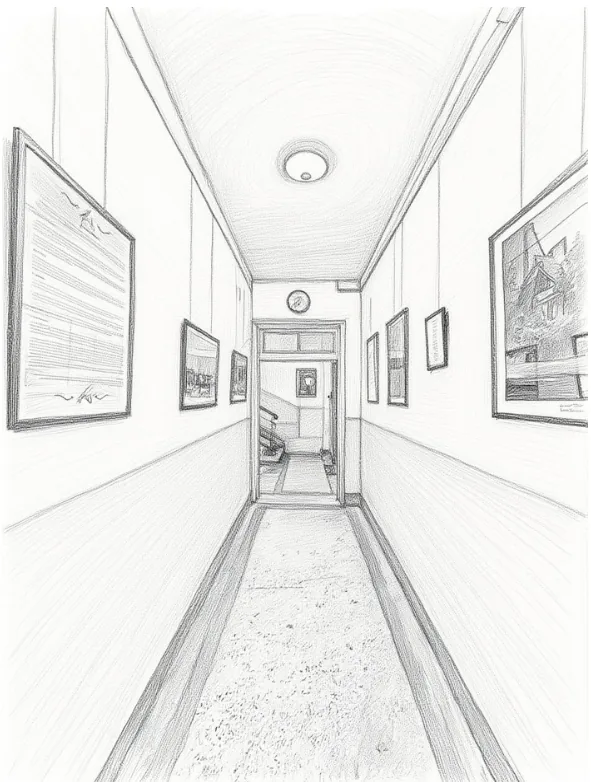
The initiative began with the restoration of the building’s entrance, with the principal aim of preserving the original architectural elements and the modernist character of the building. Rather than erasing the traces of time, the renovation became the starting point for a new narrative — about the memory of the place and the people who inhabited it across different eras.
Out of this idea came the exhibition “Behind a Closed Door”, which opened on 16 June 2024. It is a permanent display of archive photographs from the Lozenets district. The photographs are not arranged as a conventional museum collection but are integrated into the architecture of the building. Every climb up the stairs becomes a journey of sorts through the history of the neighbourhood — from its first developments and family houses to the changes of the decades that followed.
The exhibition asks how a contemporary city can keep its memory outside institutional spaces. Instead of being confined to a museum or an archive, history returns to where it belongs — to the urban fabric itself, among the people who live alongside it every day.
The opening extended this idea beyond the building’s interior. The courtyard was transformed into a temporary open-air gallery, where the sculptures of Dr Mihaela Kamenova added a new layer to the visual narrative. At the same time, an artistic intervention by Martin Enev and Martina Boborachka breathed new life into an old outbuilding in the yard, turning it into an art object that connects the history of the place with contemporary forms of expression.
In this way the various spaces — the entrance, the staircase, the courtyard and the building as a whole — cease to be merely an architectural setting. They become participants in the exhibition, and the visitor does not simply view exhibits but moves through an experience in which history is revealed gradually, through movement, light, materials and memory.
The project was carried out by The Face of Sofia, with the building’s residents, researchers, artists and volunteers as partners, united around the idea that preserving cultural heritage is not a task for institutions alone but a process in which local communities take the lead. It is they who can turn seemingly ordinary places into spaces of real cultural value.
Among the guests at the opening were figures from cultural and public life, researchers of Sofia’s history, architects, journalists, residents of the neighbourhood and dozens of friends of the initiative. The event showed that interest in urban history does not end with the archives — it finds its natural home in the neighbourhoods, the buildings and the people who go on keeping their memory alive.
This project is part of The Face of Sofia’s mission to promote the architectural and cultural heritage of the capital through new forms of presentation that bring history together with contemporary art and active community involvement. It offers a model for how a residential building can become a place of culture, education and dialogue — without losing its original function, but rather enriching it.
“Behind a Closed Door” shows that urban memory does not live in the archives alone. It lives in homes, on staircases, behind façades and in the personal stories of people. When those stories are gathered, preserved and shared, the city begins to tell its own story.